
10 Common Electrical Mistakes and How to Prevent Them
10 common electrical mistakes can cause overheating, electric shock, equipment damage and even fire. Learn how to avoid wrong MCB sizing, overloaded circuits, poor earthing, loose connections and other common electrical problems.
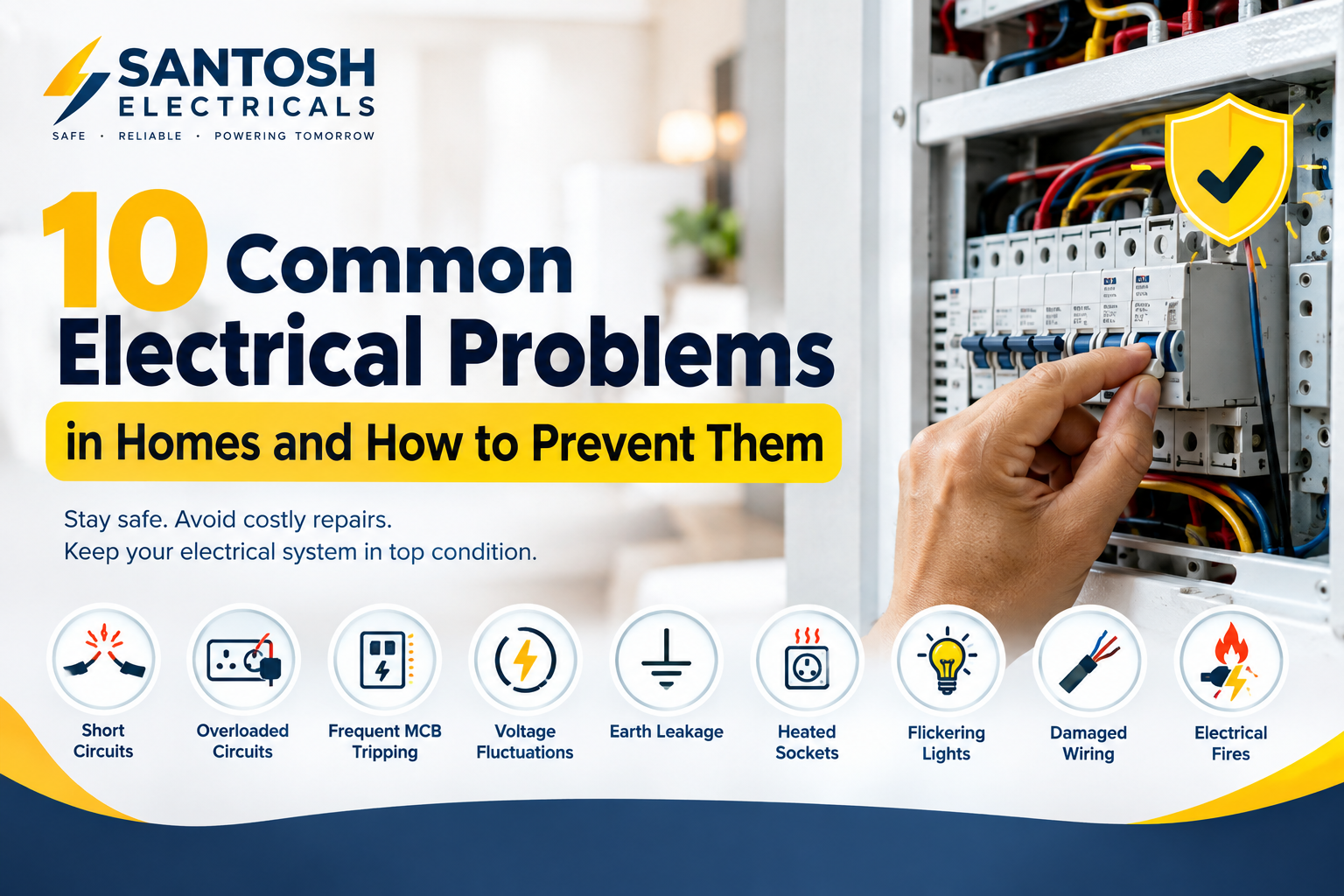
Electrical systems make modern homes, offices, shops and commercial buildings comfortable and convenient. We use lights, fans, air conditioners, refrigerators, geysers, washing machines, computers and many other electrical appliances every day.
But small electrical mistakes can become serious safety problems.
A wrongly rated MCB, overloaded socket, loose connection, damaged cable or poor earthing may initially appear harmless. Over time, these problems can cause overheating, equipment damage, electric shock or even an electrical fire.
The good news is that most common electrical mistakes can be prevented through proper planning, correct product selection, professional installation and regular inspection.
In this guide, we explain 10 common electrical mistakes and how to prevent them.
Electrical safety note: Electrical installation, testing and repair work should be carried out by a qualified electrician. Never work on an energized circuit.
- Choosing the Wrong MCB Rating
One of the most common electrical mistakes is selecting an MCB only based on the appliance load or choosing a higher rating to prevent frequent tripping.
An MCB is designed to protect the electrical circuit against overload and short circuits. Its rating must be selected according to the circuit design, conductor size, installation method and expected load.
For example, installing a higher-rated MCB on a circuit with undersized wiring does not make the circuit safer.
How to prevent it
Before selecting an MCB:
- Calculate the expected electrical load.
- Check the cable size.
- Consider the type of load.
- Select the appropriate MCB rating.
- Consider the required MCB curve according to the application.
- Check the breaking capacity required for the installation.
- Follow applicable electrical standards and manufacturer recommendations.
For larger installations, MCB selection should be part of the overall electrical design rather than an isolated decision.
Tip: If an MCB trips frequently, don’t simply replace it with a higher-rated MCB. Find out why it is tripping.
- Not Installing RCCB/RCD Protection
An MCB and an RCCB perform different functions.
An MCB primarily protects the circuit from overload and short circuit, while an RCCB is designed to detect leakage current and provide additional protection against electric shock and electrical leakage.
Many older installations have MCB protection but inadequate residual-current protection.
How to prevent it
Consider appropriate RCCB/RCD protection as part of the electrical installation, particularly for circuits and areas where leakage or shock risk may be higher.
A qualified electrician should select the correct:
- RCCB type
- Number of poles
- Current rating
- Residual operating current
- Installation arrangement
The RCCB should also be tested periodically using its test function according to the manufacturer’s instructions.
- Using Undersized Electrical Wires
Another common mistake is selecting electrical cable based only on price.
An undersized conductor carrying excessive current can heat up. Continuous overheating can damage insulation and create a serious safety risk.
Different appliances and circuits require different conductor sizes depending on:
- Load current
- Cable material
- Cable length
- Installation method
- Ambient temperature
- Voltage drop
- Grouping of cables
- Applicable standards
How to prevent it
Do not select cable size simply because “this size is normally used.”
Calculate the required conductor size based on the actual application.
For example, a lighting circuit, socket circuit, air-conditioner circuit and high-power geyser circuit may require different cable arrangements.
Best practice: Size the cable first and then coordinate the protective device with the cable and circuit design.
- Overloading Sockets and Extension Boards
Plugging several high-power appliances into one extension board or socket is a common household mistake.
A single power strip may be used for a refrigerator, microwave oven, kettle, induction cooker and other appliances simultaneously.
The socket, plug, extension cable or internal contacts may become overloaded.
How to prevent it
- Avoid connecting multiple high-power appliances to one socket.
- Use appropriately rated sockets and plugs.
- Use dedicated circuits for high-load appliances where required.
- Avoid cheap or damaged extension boards.
- Never use an extension cable as a permanent substitute for proper wiring.
- Check plugs and sockets for overheating or discoloration.
If a plug or socket feels unusually hot, switch off the supply and have it inspected.
- Ignoring Loose Electrical Connections
Loose connections are easy to overlook because they may not cause an immediate problem.
However, a loose terminal can create increased electrical resistance. This can result in localised heating, carbonisation, arcing and eventual equipment failure.
Loose connections may occur inside:
- Distribution boards
- Switchboards
- Socket outlets
- Junction boxes
- Isolators
- MCB terminals
- Appliance connections
How to prevent it
During installation and maintenance:
- Use properly rated terminals and accessories.
- Tighten connections according to manufacturer requirements.
- Avoid damaged terminals.
- Check for signs of overheating.
- Inspect older installations periodically.
Any signs of burning, blackening, melting or repeated tripping should be investigated immediately.
- Poor or Inadequate Earthing
Earthing is a critical part of electrical safety.
A properly designed earthing system provides a path for fault current and helps protective devices operate under fault conditions.
Poor earthing can increase the risk of electric shock and equipment damage.
Common mistakes include:
- Inadequate earth connection
- Corroded earth connections
- Damaged earth conductors
- Improper earthing arrangement
- Assuming a water pipe is an acceptable substitute for a properly designed earthing system
How to prevent it
The earthing system should be designed and installed according to applicable standards and local requirements.
Qualified professionals should inspect and test the earthing system using appropriate testing equipment.
Don’t judge the quality of earthing simply by looking at the wire.
- Mixing Up Neutral and Earth Connections
Neutral and earth are not interchangeable conductors.
Incorrect connections between neutral and earth can create dangerous conditions and may cause unwanted tripping or abnormal current paths.
This mistake is particularly important when modifying an existing distribution board or adding new circuits.
How to prevent it
Ensure that:
- Neutral conductors are correctly identified.
- Earth conductors are correctly connected.
- Neutral and earth are arranged according to the system design.
- Distribution boards use suitable neutral and earth terminals/bars.
- Modifications are carried out by a qualified electrician.
Never assume that two wires with similar colours or appearance perform the same function.
- Buying Very Cheap or Unverified Electrical Products
Electrical products are safety-critical products.
Choosing an MCB, RCCB, cable, socket, switch or distribution board only because it is cheaper can create problems later.
Poor-quality or counterfeit electrical products may have inadequate materials, incorrect markings or unreliable performance.
How to prevent it
When purchasing electrical products:
- Buy from a reliable electrical supplier.
- Check the manufacturer and product specifications.
- Verify the product rating.
- Check packaging and markings.
- Prefer genuine products from established brands.
- Keep invoices and product details for warranty purposes.
For contractors and project buyers, maintaining a proper brand and specification schedule can also reduce the risk of incorrect substitutions.
Santosh Electricals supplies electrical products across categories including wires and cables, MCBs, distribution boards, lighting, switches and industrial electrical products.
- Not Providing Adequate Surge Protection
Modern homes contain many electronic devices such as:
- Televisions
- Computers
- Routers
- Smart appliances
- CCTV systems
- Home automation equipment
- LED drivers
- Chargers
Voltage disturbances and transient surges can damage sensitive electronics.
Many installations focus only on MCB protection and overlook the need for appropriate surge protection.
How to prevent it
Depending on the installation and risk assessment, consider appropriate Surge Protection Devices (SPDs).
The correct SPD type and configuration should be selected according to:
- Electrical system arrangement
- Installation category
- Exposure to transient overvoltage
- Building characteristics
- Lightning protection arrangements
- Manufacturer recommendations
A qualified electrical professional can determine whether SPD protection is appropriate for your installation.
- Ignoring Warning Signs and Skipping Electrical Inspection
One of the biggest mistakes is ignoring small warning signs.
Electrical problems often provide clues before they become serious.
Watch for:
- Flickering lights
- Frequent MCB trips
- Burning smell
- Buzzing or crackling sounds
- Hot switches or sockets
- Discoloured plates
- Melting insulation
- Sparks
- Electric shock or tingling sensations
- Appliances behaving unusually
These signs should never be ignored.
How to prevent it
Arrange an electrical inspection when:
- The building is old.
- Major appliances are added.
- Renovation work is carried out.
- Frequent electrical faults occur.
- The electrical load has increased significantly.
- Wiring or distribution boards show signs of deterioration.
Preventive inspection is usually much cheaper than dealing with electrical damage after a failure.
Electrical Safety Checklist
Use this simple checklist for your home, office or shop:
Distribution Board
☐ Correct MCB ratings
☐ Appropriate RCCB/RCD protection
☐ Proper labelling of circuits
☐ No loose or overheated terminals
☐ Adequate enclosure and protection
☐ Proper neutral and earth arrangement
Wiring
☐ Correct cable size
☐ No damaged insulation
☐ No exposed conductors
☐ Proper termination
☐ No unnecessary joints
☐ Proper earthing
Sockets & Switches
☐ No cracked switches
☐ No loose sockets
☐ No overheating
☐ No overloaded extension boards
☐ Correctly rated accessories
Appliances
☐ High-load appliances have suitable circuits
☐ Cables are not damaged
☐ Plugs are not overheating
☐ Appliances are properly earthed where required
Need prices or stock on anything above?
Send your list on WhatsApp — rates, freight and ETA in ~15 minutes during working hours.